I am an Engineer, and This is Tinker With Things
Being an engineer was not part of the plan.
Going to engineering school was the path of least resistance at 19 — both my parents work in engineering and I am objectively good at math and science (my friends would disagree on the quick math part). To top it off, I didn’t have any grand ambitions straight out of high school.
Needless to say, education itself doesn’t magically produce ambition or tell you what career to pick. After a few years of learning theoretical engineering things in university, I still did not want to be an engineer. I’d imagined myself being in a room full of men (this still holds true) and doing mad calculations on bending forces in a truss. Not particularly enticing, I must admit.
All that being said, I eventually ended up being an engineer, without really understanding what it meant to be one. If I had to summarize my job as a Manufacturing Engineer, it’d be this: to resolve technical issues on the production line, to do things better and faster, and to deliver our products on time. Wow, a bunch of corporate jargon etched in my mind. But yes, you get the point.
My role evolved when I became the Lead Engineer. Basically, same but more things. The “more”? Project ideation and management, team/people management, strategy and planning, yada yada, papaya. The list goes on.
These responsibilities described my job, but they did not explain what engineering meant to me. It was something that crystallized for me over the years.
So what does engineering mean to me? At its heart, it has always been about problem-solving.
It means thinking critically, uncovering root causes, weighing the options at hand and adapting when context changes.
Most problems begin with expansion: gathering information, identifying variables, and imagining possibilities. Eventually, that expansion has to give way to convergence: narrowing the scope, weighing trade-offs, and deciding what to do. Rinse and repeat.
It doesn’t matter what the situation is. Armed with this approach, I carry a confidence that almost any problem can be worked through. And this is exactly the part of engineering that I keep coming back to.
Yet, the problems I enjoyed the most were the tangible ones. I recall the days crouched over a tool, multimeter in one hand and schematic in the other. These were the moments when my eyes lit up.
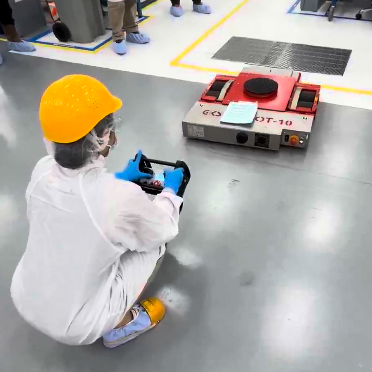
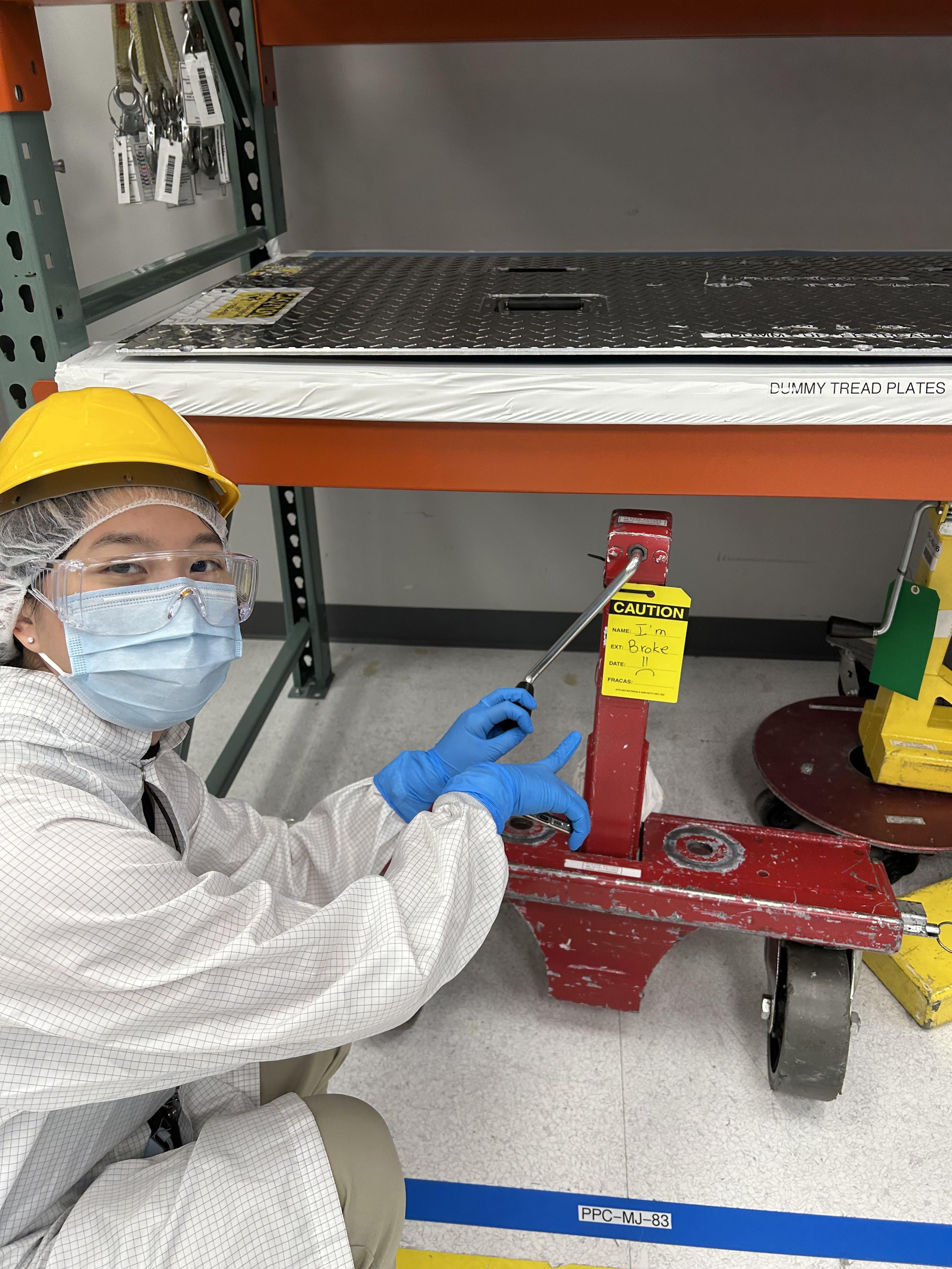
Snippets of me as an Engineer.
Peep the full Asian squat while controlling a robot, and also a funny tag I’d found while doing a line walk.
Somewhere along the way, I used less and less of my hands to solve problems. Essentially, I became a paper-engineer (as I’d like to call myself): a PowerPoint expert, a cross-functional collaborator, a master mediator. I was increasingly removed from the hands-on part of the work itself.
This ended up becoming an internal point of tension for me, as I sought outlets that would let me think and solve with my hands again. Woodworking and pottery entered my life.
I was intrigued by craft: the way each material allowed, resisted and demanded; the non-linear nature of the process; and the balance between intention and responsiveness. There was also the humility in learning a new skill, but that’s a discussion for another day.
Bit by bit, the joy returned. Hours passed without notice. I had found my missing piece. I just had not figured out where it belonged.
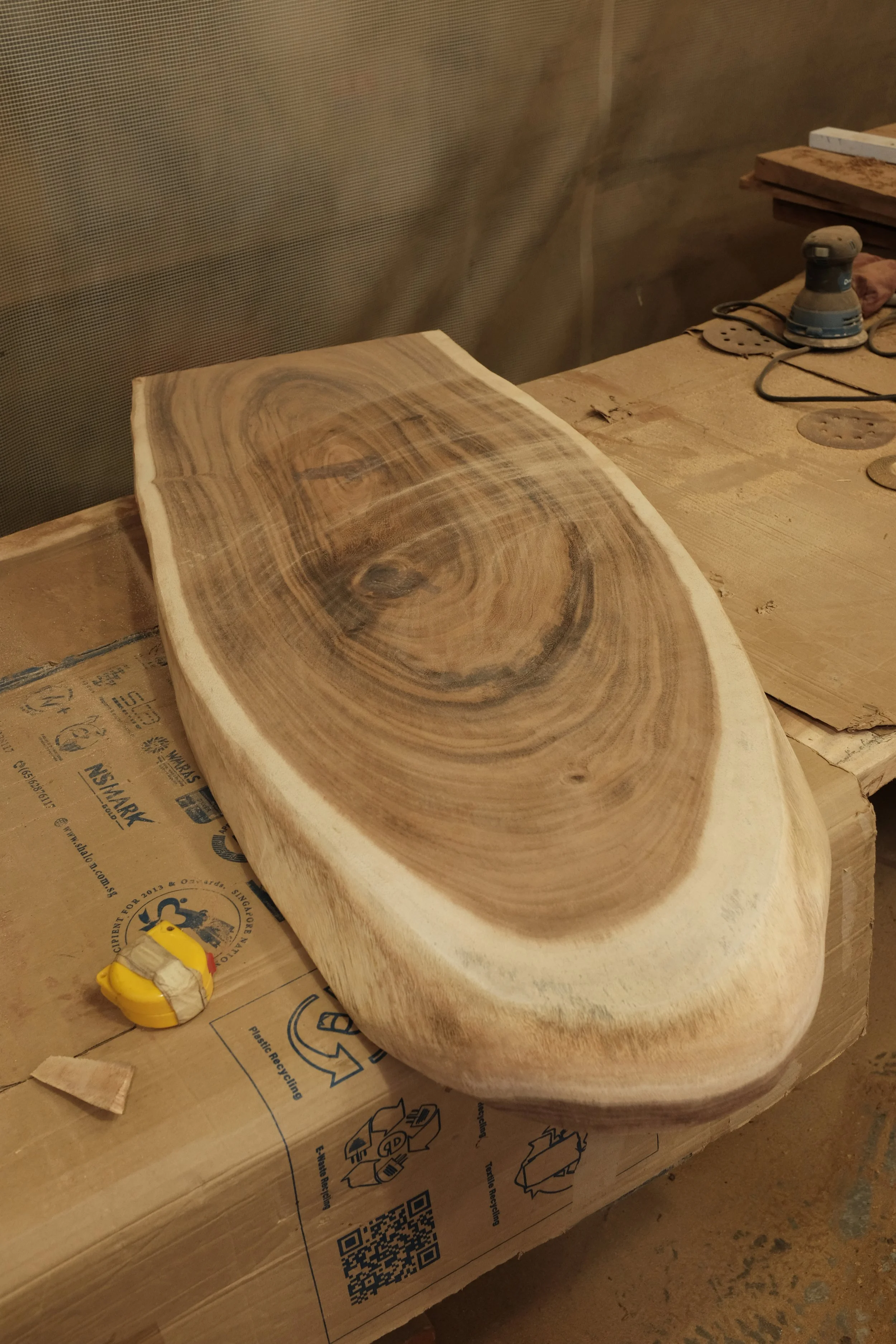
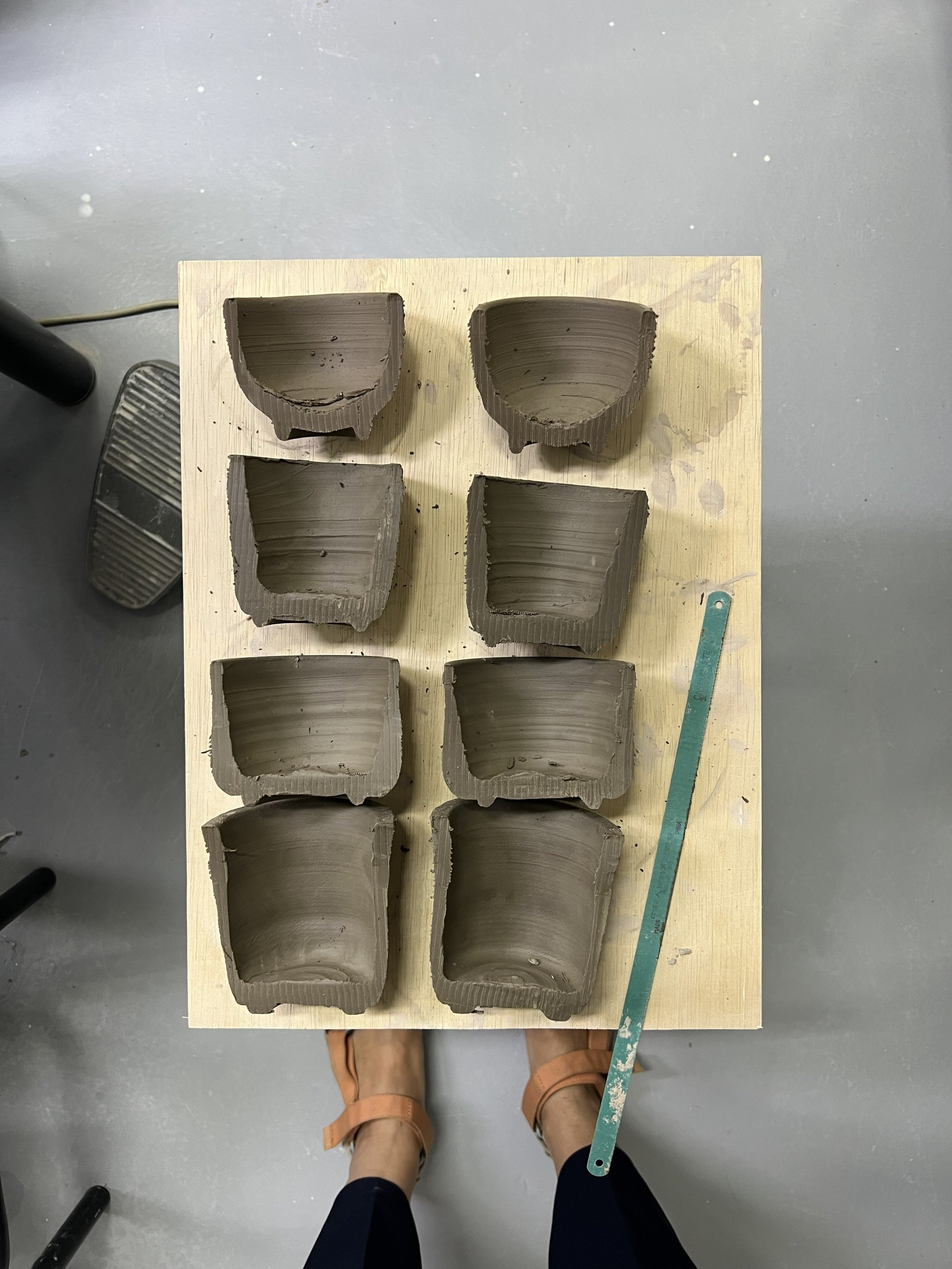
woodworking & pottery snippets
The question was: how could I integrate an engineering way of thinking and a physical way of making? I needed a space where neither thinking nor making was secondary.
Tinker With Things began somewhere between these two versions of myself: the engineer who framed and resolved problems, and the maker who learned to think through materials and work with her hands.
I still do not know exactly what Tinker With Things will make. But I do know how I want to approach its creation: with consideration, curiosity and heart.
May this journal be a record of my musings and reflections. May Tinker With Things evolve into a brand that brings me closer to the way I want to live, learn, and make. And may the things I make reflect exactly that.
