Feeling / Function — Materials
One of the steps in pottery throwing is to check the vessel’s base thickness. To do so, you’d have to use a needle to pierce through the base of the vessel, which would leave a tiny hole in its base. During my first wheel-throwing demonstration, my instructor, Alvin, did exactly that.
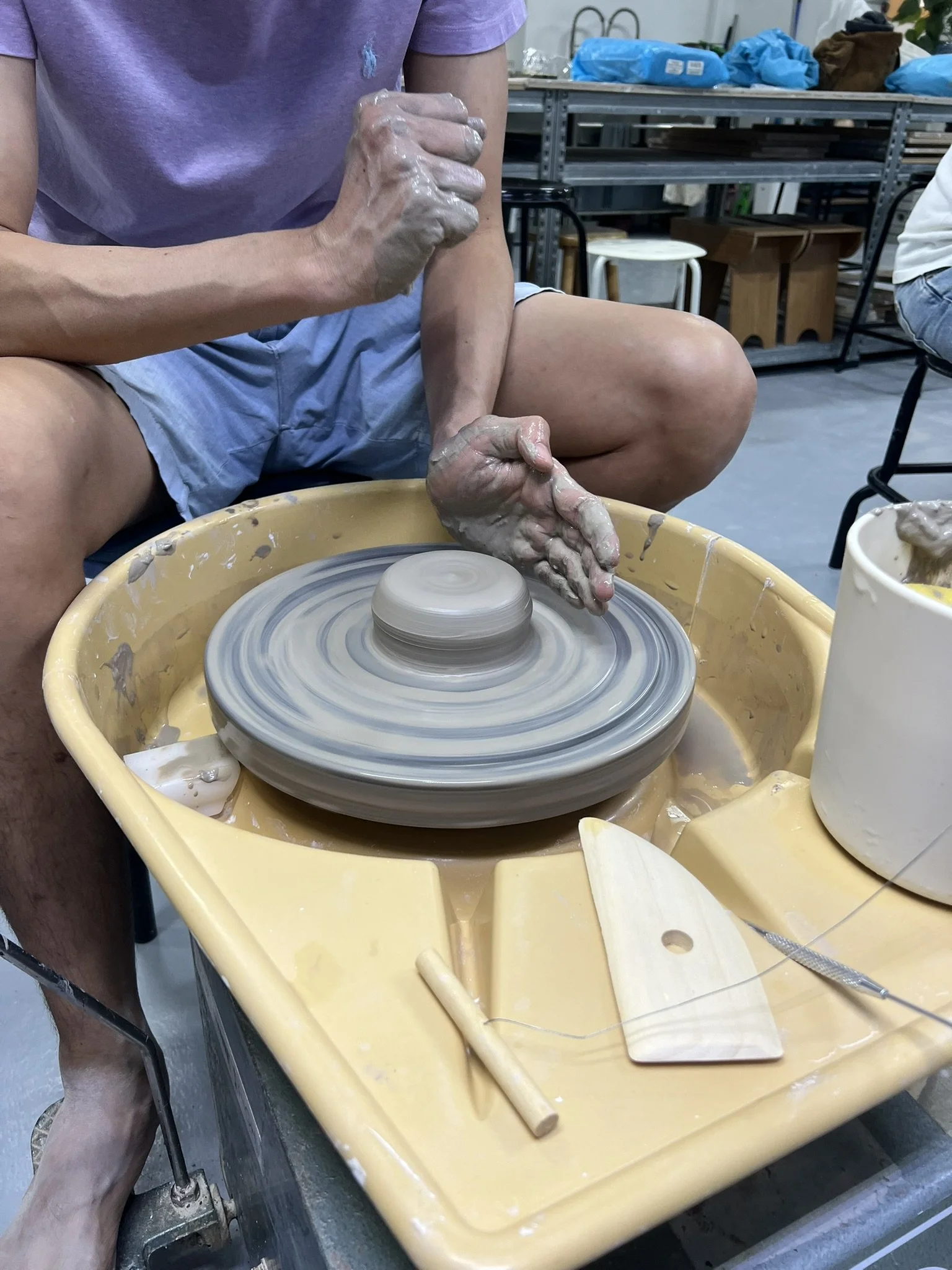
my first pottery lesson
When I first saw the hole, alarm bells went off in my mind. I couldn’t understand. How can you just pierce a hole through the vessel like that? What about the hole?
Alvin then applied a gentle pressure to the hole in the base… Somehow, it seemed to mend itself. For somebody accustomed to extensive rework processes for metal parts in Manufacturing, this was essentially magic. Literally, a touch of the finger. The wet clay moved beneath his finger, closing the tiny opening as though it had never been there.
It was the first time I understood a material not through a specification, but through how it yielded, resisted, and responded to touch.
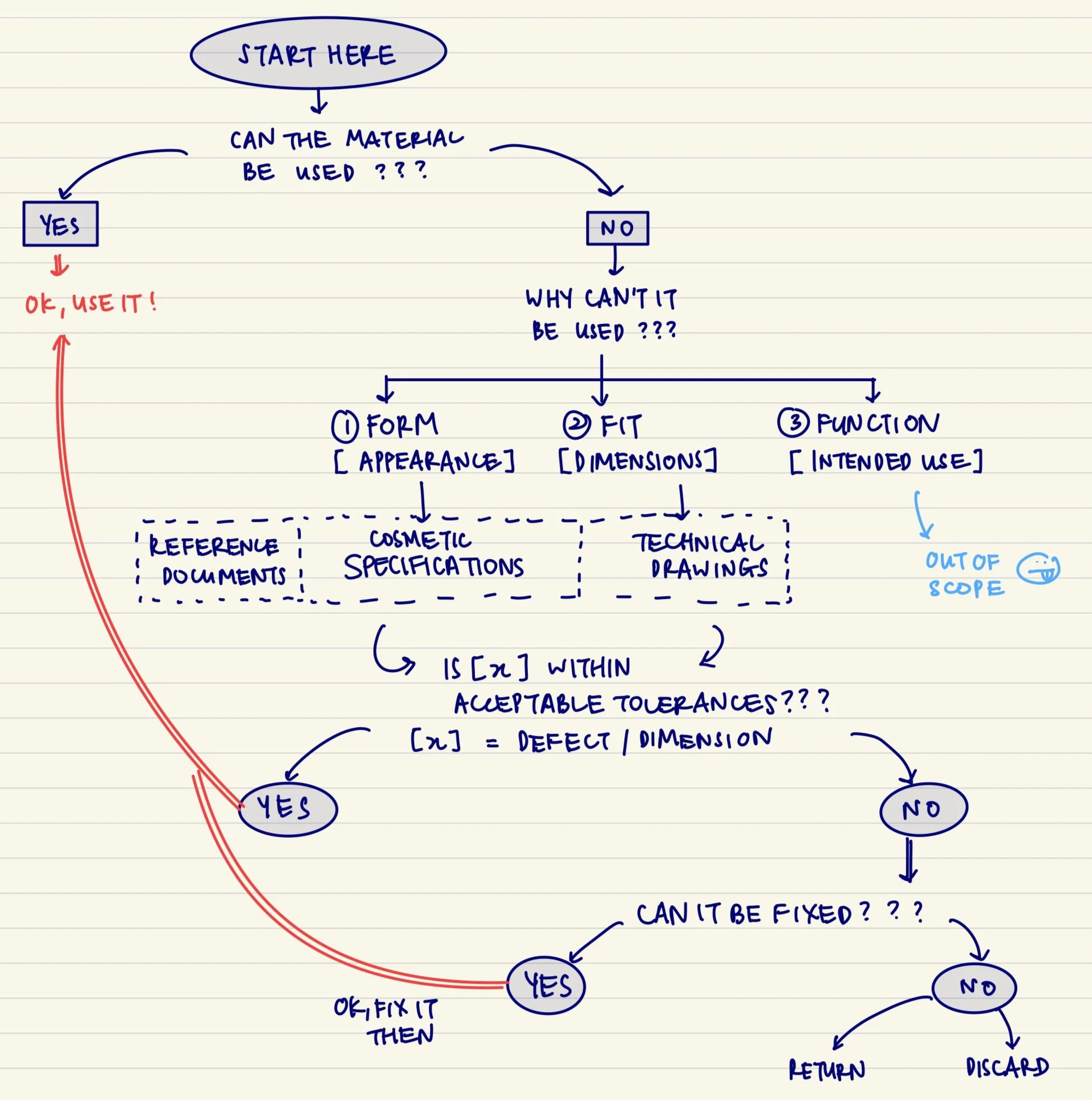
highly simplified decision-making tree as an engineer
For years, materials had reached me as a specification. Material concerns are well defined in my line of work: quality assurance, regional availability, standardization and safety. These are clear metrics to work with, which can then be translated into decision criteria.
Contextually, decision-making for materials usually felt structured in manufacturing. Somehow, it’d always fit in a flow chart. And that had been my reality for years.
Insight into Choice
My job was usually to make a chosen material work reliably at scale, and not to decide why it had been chosen in the first place.
One year into my job, I dialed into a meeting for our new product line. You’d have Design, Engineering, Manufacturing, Service, Sales, Product Managers, etc. As the discussions trudged along, the technicalities and design of the new product were highlighted. One material was chosen for its thermal properties; another for durability and corrosion resistance at the customer site.
Someone had chosen each material because its properties shaped what the product could become.
Material Interactions
Product design highlighted how materials are chosen. Craft showed me what those choices feel like in my hands.
The wheel spins, the clay travels, the hands mold, and finally, the vessel takes shape. Some clays feel grainier and more structurally forgiving to me, which gave me a greater sense of control. Meanwhile, the softer and smoother clays are more responsive, which means that greater control (and potentially, skill) is required. Each clay asks for a different kind of attention. The material changes, and the maker has to adapt with it.
In spite of being cut, wood keeps its “aliveness” — the shrinkage of green wood with time and humidity; the resistance on the jigsaw as it goes through different segments and grains of the log. Such behavior challenged my assumption that a finished material could ever truly be still.
Material Presence in a Space
It’s not exactly a done deal when the making ends. The grain, texture, weight, colors and hues of the final object are still present — all of which could lend emotion to the room it resides in.
It might be a ceramic vase sitting on your dining table, with a flower arrangement reflecting the current season. Does the glaze on the vase accentuate the hues of the petals? Or is it a bare vase that reminds you of the earthiness of the material and flowers?
It might also be a wooden bowl sitting on your shoe cabinet, housing all kinds of keys and small items you’d grab on your way out. The somewhat haphazard grains contrasting with the perfect bowl shape. Over time, this bowl becomes attached to your small ritual of leaving and returning home.
Feeling / Function
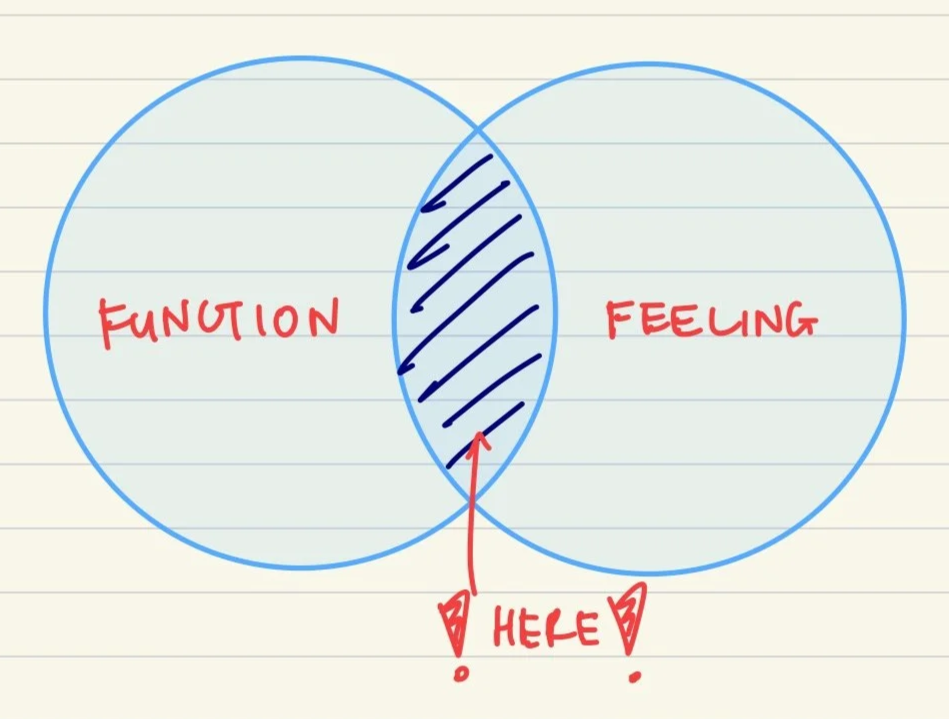
the intersection of function and feeling
It’s easy for me to defer to the functional aspect of materials any day. After all, engineers need to make things work — in this case, make things functional. Through craft, I am also beginning to notice how materials make me feel. It’s still raw, but it’s developing.
I’d like to think of it this way: what can this material do, and what does its presence make us feel? Essentially, the intersection of function and feeling (see above). The most interesting material decisions stem this overlap.
Just as I could pick wood for its sturdiness and stability, it could also be its intricate grains and oak hues that lend warmth to the room. Just as I could pick fabric for its light diffusion and drape around a form, it could also help lend some softness to a room filled with hard materials.
Material is not just a specification. It is both a functional and emotional choice. Function is a language that I know well, while feeling is one that I’m starting to learn.
